
This story originally appeared in The Centre County Gazette.
STATE COLLEGE — Community members gathered Tuesday, Feb. 3, at the State College Borough Municipal Building for the National Day of Racial Healing, an annual observance aimed at fostering dialogue, reflection and understanding across lived experiences, histories and identities.
The event was part of a partnership between the Borough of State College, the Community Diversity Group and the American Association of University Women. Organizers said the goal was not only to acknowledge painful histories, but to create space for community connection and healing rooted in truth.
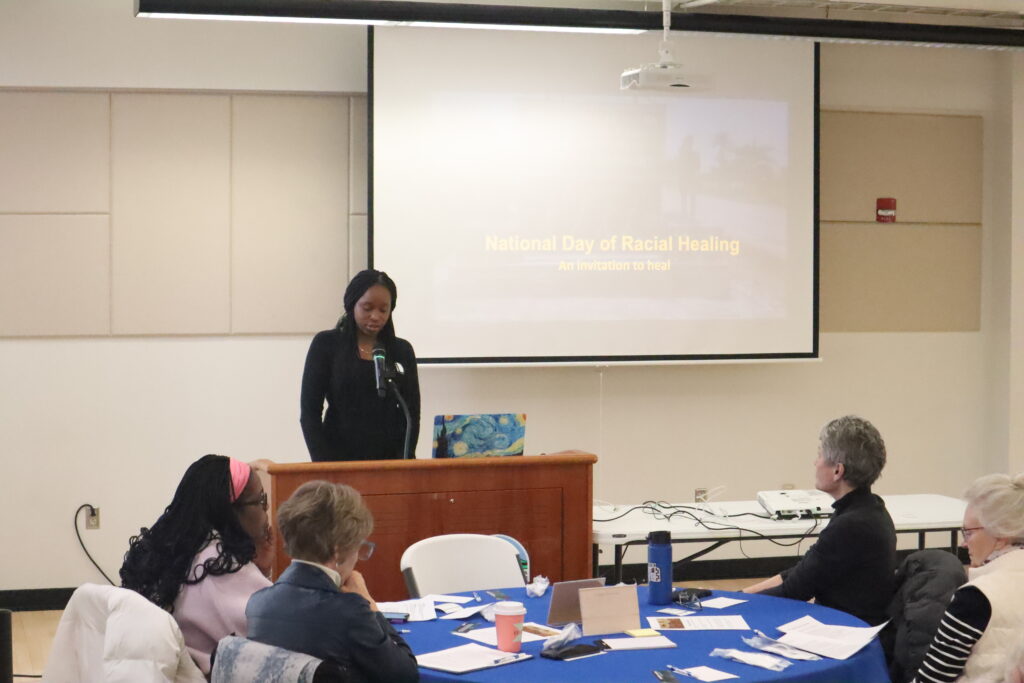
Chiluvya Zulu, Associate Director for Access, Equity and Inclusion with the borough, opened the event by grounding the gathering in a quote from James Baldwin: “Not everything that is faced can be changed, but nothing can be changed until it is faced.”
“Healing does not happen by accident,” Zulu said. “It happens when people make a conscious choice to show up, even when the work feels complex, emotional and uncertain.”
Zulu emphasized that racial healing is both global and local, noting the commitment of community partners to continue creating space for dialogue even when conversations are difficult. She also acknowledged the range of emotions participants carried into the room, including hope, fear, determination and fatigue.
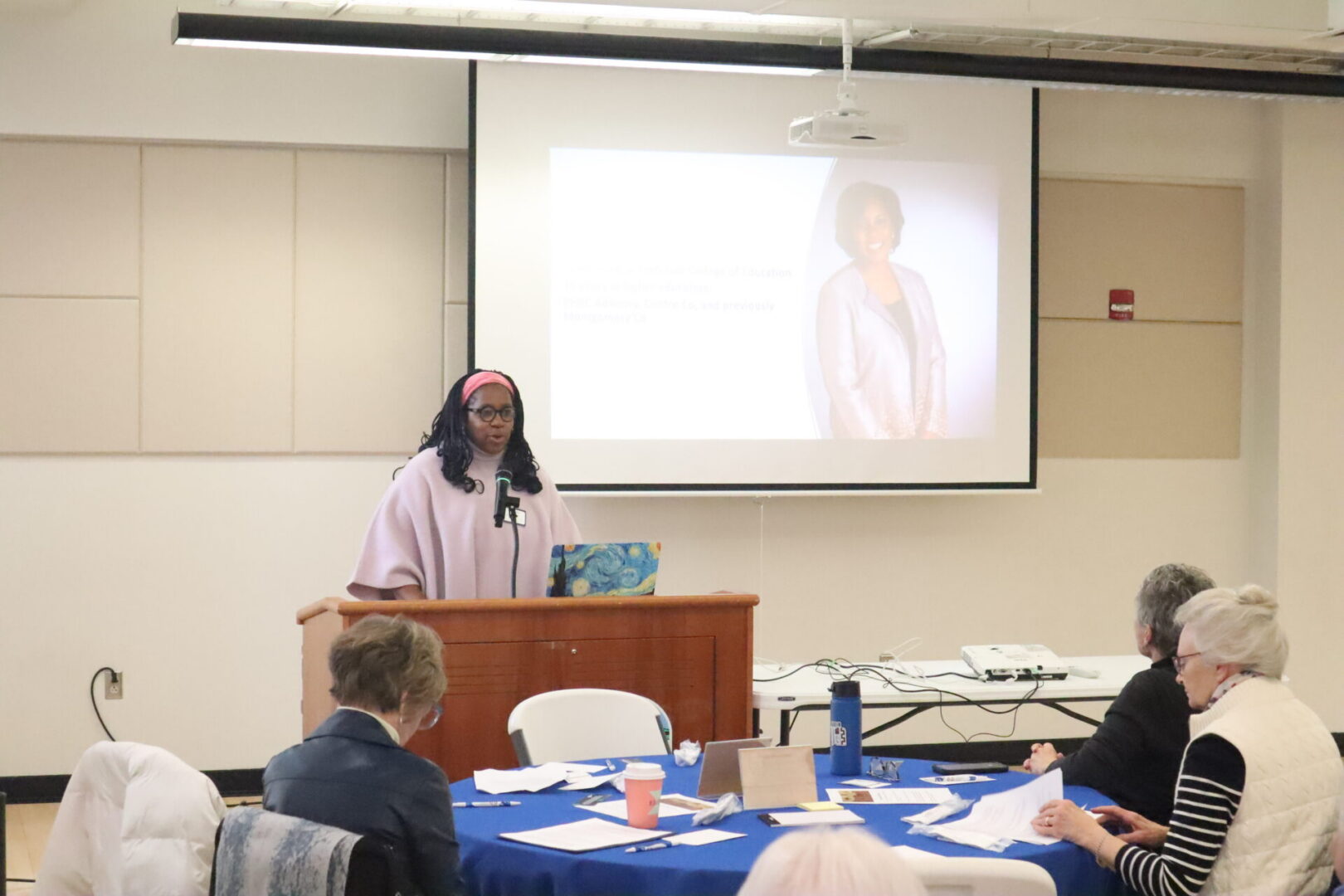
The keynote address was delivered by Dr. Leah P. Hollis, Associate Dean for Access, Equity and Inclusion and Professor of Education at Penn State, who spoke on what she described as “the invitation to heal.”
“What does it mean to heal when a system damages you or a community?” Hollis asked. “When the wound is historical and collective and inherited, how do you deal with that?”
Hollis used the metaphor of physical injury to explain that healing does not mean returning to an original state. “Even if you’ve broken a bone, that bone is forever changed,” she said. “Healing is about not forgetting. It is about purposefully remembering correctly.”
Drawing from historical examples, Hollis spoke about racial terror lynchings, Indigenous removal, Japanese internment, the Chinese Exclusion Act, the Bracero Program and the persecution of Irish and Italian immigrants, emphasizing that these were not isolated events but part of repeating patterns of power and dehumanization.
“When power feels threatened, humanity is redefined,” she said. “Laws are written, categories are created, silence is normalized and harm is made to look like it’s lawful.”
Hollis also shared personal reflections on visiting Badagry, Nigeria, a former port in the transatlantic slave trade. She described the experience as deeply emotional, connecting her own family lineage to the history of enslavement and survival.
“Survival is not an accident,” Hollis said. “It is resistance.”
Throughout her remarks, Hollis stressed that reconciliation requires truth and action, not slogans or symbolic gestures. “Without truth, healing becomes denial,” she said. “We have to tell the truth, not to make people feel guilty or shame, but so we know the path that we have come through to get to this, to get to where we are today,” Hollis stated
“Otherwise, unity is just a performance,” Hollis said.
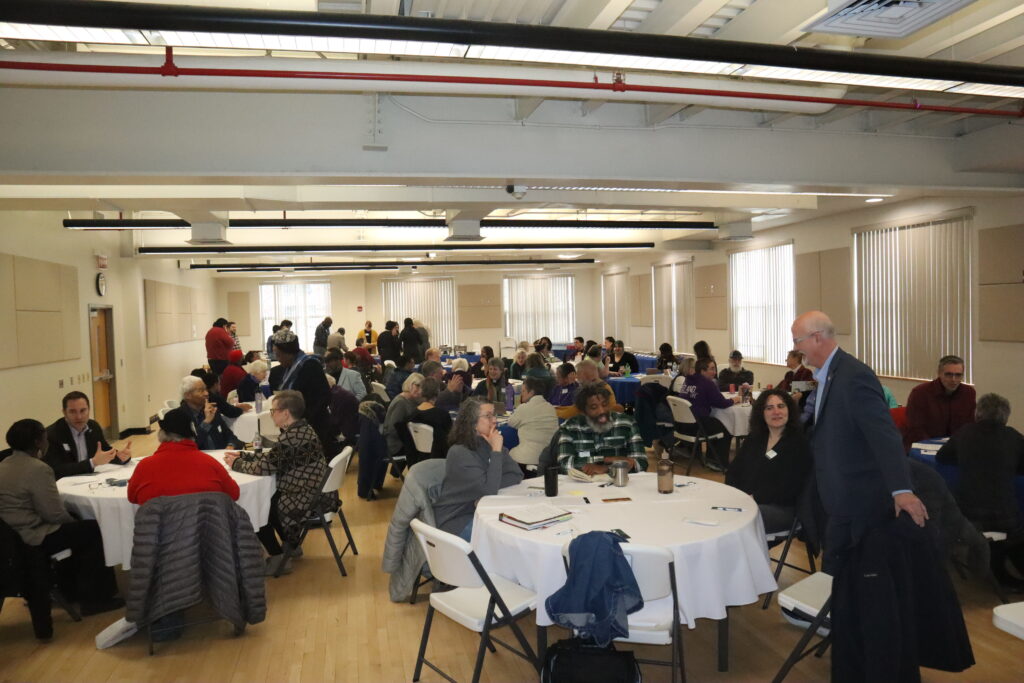
Following Hollis’ speech, attendees were invited to share their own family histories and reflections. Several participants spoke about immigration, displacement and survival, connecting their personal stories to the broader themes of the day.
Zulu closed the morning session by encouraging participants to continue conversations over lunch and small-group discussions, reminding attendees that “none of us enter this space as just one thing.”
Organizers said the event was designed not as a one-time conversation, but as part of an ongoing effort to strengthen community understanding through honesty, listening and shared humanity.



